A Conversation with a Master Perfumer
Inside the mind of an olfactory artist
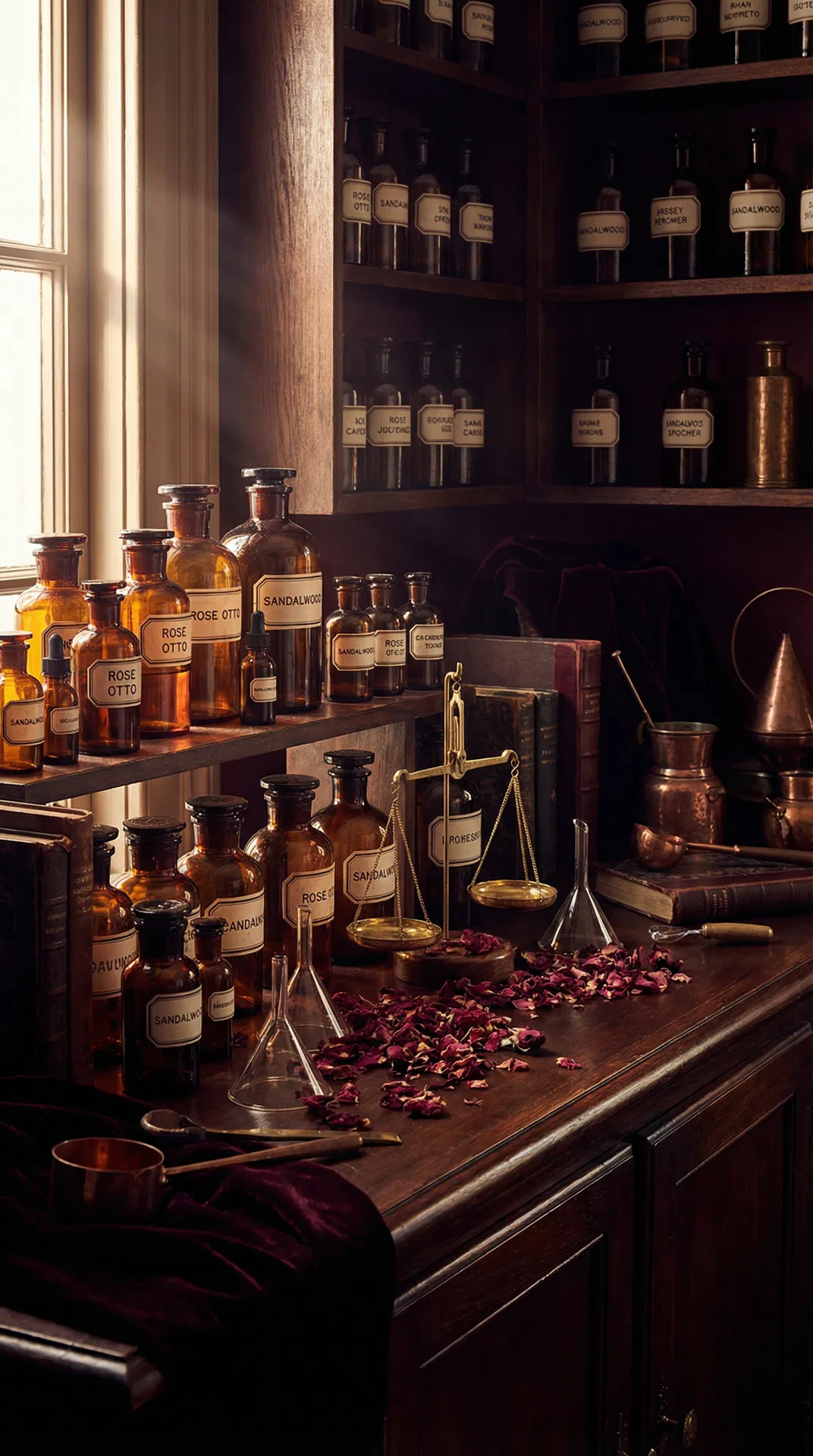
The atelier is modest — a simple room lined with hundreds of small brown bottles, each labeled in a precise hand. There is no luxury here, no marble or gold. Only the raw materials of an ancient art, and the extraordinary nose of someone who has spent four decades learning to speak their language.
"People think perfumery is about mixing pleasant smells," our subject begins, adjusting a strip of blotting paper beneath their nose. "But that is like saying painting is about mixing pleasant colors. The real work is in understanding structure, in knowing how materials behave over time, how they interact with skin chemistry, how they speak to emotion."
The training of a perfumer — or "nose," as they are sometimes called — is one of the most rigorous apprenticeships in any creative field. Students at the great perfumery schools in Grasse and Paris spend years memorizing hundreds of raw materials, learning to identify them blindfolded, understanding their chemical properties and their poetic possibilities.
"I can tell you the exact moment I understood what perfumery really was," they continue. "I was working on a composition that wasn't coming together. I had all the right ingredients, the proportions were technically correct, but it was lifeless. Then I added a tiny amount of something unexpected — a material that, on its own, smells almost unpleasant. And suddenly the whole composition came alive. That's when I understood: perfumery is not about individual notes. It's about the conversation between them."
The master speaks of their materials with a tenderness that borders on reverence. Each bottle contains not just a chemical compound but a story — of the fields where the flowers were grown, the forests where the resins were harvested, the traditions that preserved the knowledge of their extraction.
"Every great perfume," they conclude, "is a kind of time travel. It connects the person who wears it to something larger than themselves — to nature, to history, to the deepest parts of their own memory. That is what I try to create. Not just a scent, but a doorway."